“If you educate one child, you do not only change one life, you open the door to a generation of opportunities.” Imagine if you had two children who were born on the same day. One was fortunate enough to receive quality education from good teachers and access to all the resources they needed to get a good education. The other child was forced to drop out of school because of their financial status and limited access to resources. Twenty years later, the first child has more opportunities to get a good education, find a well-paid job, make financial decisions, and provide for their family. The second child is still struggling to get the same opportunities that the first child had.
Sometimes the only difference between the two is education.
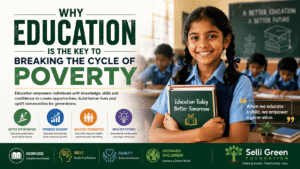
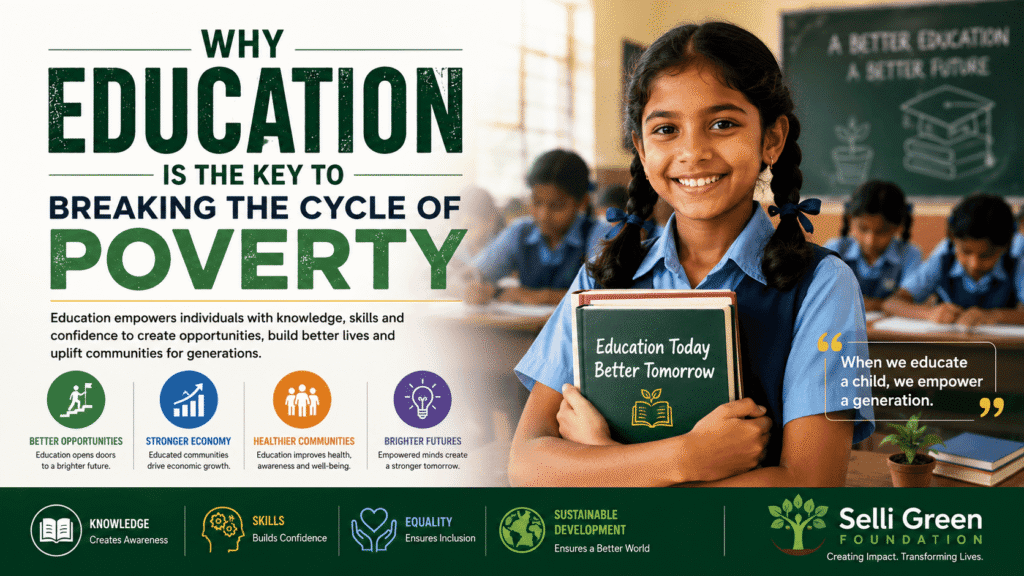
Education is one of the best ways to break the cycle of poverty.
It is a proven solution because it creates opportunities for people, gives people confidence and skills, encourages innovation, and makes informed decisions.
There are millions of children who are unable to get a proper education because of poverty, lack of access to good education, gender discrimination, disability, poor infrastructure, and other challenges. These challenges have a direct and long-term impact on employment, health, financial status, and community development. Therefore, investing in education is one of the best ways to create sustainable development and have a great impact on the world.
At Selli Green Foundation, we believe that education is the key to better families, better communities, and ultimately a better world.
Understanding the Cycle of Poverty
Poverty is a state in which a person is unable to meet their basic needs due to a combination of factors. The most common factors that contribute to poverty include limited access to quality education, poor health and nutrition, child labor, unemployment, financial instability, lack of digital access, poor living conditions, and limited social opportunities.
These factors contribute to the cycle of poverty because they prevent people from improving their social status, education, and financial status. Most of these factors are passed from one generation to another, which is why people are unable to break the cycle of poverty.
Education breaks the cycle of poverty because it creates opportunities for people to improve their social status, financial status, and overall well-being.
Education breaks the cycle of poverty in many ways, including:
- Giving people access to better employment opportunities
- Improving a person’s financial literacy
- Improving health and general well-being
- Giving people confidence and skills
- Encouraging innovation and entrepreneurship
- Breaking the gender inequality barrier
- Creating informed communities
Education Is More Than Just Classroom Learning
When most people think of education, they think of classroom learning. However, education goes beyond the classroom and provides people with various skills and knowledge that help them become better versions of themselves.
Education teaches people how to think critically, creatively, and logically. It also teaches them how to make informed decisions, communicate effectively, and be responsible members of society. Quality education also improves a person’s social skills, financial literacy, health, and technological skills.
Education prepares people for the real world by giving them the relevant knowledge and skills to be successful in their careers and in life.
How Education Breaks the Cycle of Poverty
Education Creates Better Employment Opportunities
One of the best ways that education breaks the cycle of poverty is by giving people better employment opportunities. Children who receive quality education have better career prospects because they have the necessary skills and knowledge to get a well-paid and sustainable job. Education also improves a person’s literacy, communication, and technical skills, which are important in almost every career.
Education helps people get sustainable jobs because:
- It makes people more competitive in the job market
- It improves a person’s communication skills
- It gives people more opportunities to get hired
- It makes people more productive at work
- It gives people better working conditions
- It makes people more likely to become business owners
Better working conditions and sustainable jobs improve a person’s financial status, which subsequently improves their general well-being and that of their family.
Education Helps People Be Financially Independent
Education breaks the cycle of poverty by giving people financial independence. Financial independence is important because it allows people to be self-sufficient and take care of themselves and their families.
Education makes people financially independent because it teaches them how to:
- Save and budget effectively
- Be responsible with their finances
- Avoid taking loans unnecessarily
- Become entrepreneurs
- Make long-term financial plans
- Make wise investment decisions
Financial literacy is an important aspect of education that is often ignored. However, it plays a critical role in breaking the cycle of poverty because it makes people more financially independent.
Education Improves Health and General Well-Being
Education and health are closely related. This is because education promotes healthy habits and lifestyles among people. Education also makes people more informed about nutrition, sanitation, disease prevention, and other important aspects of health.
Education breaks the cycle of poverty by improving health and general well-being because:
- It makes people more likely to get vaccinated
- It makes people practice healthy habits
- It makes people go to the hospital for treatment
- It makes people take good care of themselves
- It makes people take good care of their children
Education improves a person’s health and general well-being, which subsequently improves their productivity and quality of life.
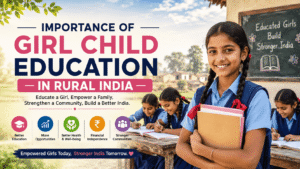
Education Empowers Girls and Women
Education breaks the cycle of poverty by empowering girls and women. This is because education gives women the confidence and skills to improve their lives and the lives of their families. Education also empowers women by giving them the opportunity to join the labor force, which subsequently improves their financial status and that of their families.
Education also empowers women by:
- Giving them the opportunity to continue their studies
- Giving them the opportunity to join the labor force
- Encouraging them to get married at an appropriate age
Making them responsible parents
- Improving their general health
- Giving them the opportunity to start businesses
- Giving them leadership skills
Girls’ education has a great impact on families, communities, and the country because educated women are more likely to have access to quality education, better employment opportunities, and better health. Educating girls is also an investment in the future generation because it improves the overall well-being of the community.
Education Encourages Innovation and Entrepreneurship
In today’s world, it is not enough to just gain knowledge. It is important to be innovative and come up with new ideas and solutions to existing problems. Education encourages innovation and entrepreneurship, which subsequently improves a person’s productivity and financial status.
Education encourages innovation and entrepreneurship because:
- It makes people more creative
- It makes people more confident
- It makes people think outside the box
- It makes people come up with practical solutions to existing problems
Innovation and entrepreneurship have a great impact on the community because they improve financial stability and productivity.
Education Creates Informed Communities
Education breaks the cycle of poverty by creating informed communities. Informed communities are important because they make better choices and decisions that benefit them and the environment.
Education creates informed communities because:
- It reduces unemployment
- It improves health and general well-being
- It makes people responsible citizens
- It reduces gender inequality
- It makes people more productive
- It makes people care for the environment
- It improves overall community development
Education has a great impact on the community because it creates informed citizens who contribute positively to the overall development of society.
How You Can Help Break the Cycle of Poverty
- Breaking the cycle of poverty requires everyone’s effort. Whether you are an individual, a business owner, a teacher, a student, or an organization, you can help break the cycle of poverty. Here are some of the ways you can help break the cycle of poverty:
- Supporting education programs
- Donating books, resources, and other resources
- Volunteering your time, resources, and skills
- Encouraging children and other individuals to continue their studies
- Supporting CSR initiatives that support education and child development
- Creating awareness about the importance of education
- Promoting gender equality
- Partnering with organizations to help support education programs
Every little effort goes a long way in breaking the cycle of poverty.
FAQs
1. Why is education considered the best way to reduce poverty?
Education is considered the best way to reduce poverty because it empowers people by giving them knowledge, skills, confidence, and better employment opportunities.
2. How does quality education benefit children?
Quality education benefits children because it makes them more literate, creative, and better communicators. It also prepares them for the real world by giving them the relevant knowledge and skills to be successful in their careers.
3. What is the relationship between education and sustainable development?
Education contributes to sustainable development because it reduces poverty, improves health and general well-being, reduces gender inequality, and conserves the environment.
4. Why do children drop out of school?
Children drop out of school because of poverty, child labor, lack of access to quality education, poor infrastructure, gender inequality, disability, and lack of nearby schools.
5. How can communities improve access to education?
Communities can improve access to education by supporting education programs, encouraging children to go to school, promoting gender equality, improving school infrastructure, and creating awareness about the importance of education.
6. What is the role of NGOs in promoting education?
NGOs play a great role in promoting education because they support education programs, create awareness about the importance of education, and help make sure everyone has access to quality education.
7. How can businesses support education programs?
Businesses can support education programs by donating to education programs, developing CSR initiatives, supporting infrastructure development in schools, and encouraging employees to volunteer their skills and time.
8. Why is girls’ education important?
Girls’ education is important because it promotes gender equality, improves general health, increases employment rates, and improves the overall well-being of the community.
9. How does education contribute to community development?
Education contributes to community development because it reduces unemployment, creates informed citizens, improves health, increases productivity, reduces gender inequality, and conserves the environment.
10. How can I support Selli Green Foundation?
You can support Selli Green Foundation by volunteering, donating, partnering with us through CSR initiatives, and supporting our awareness campaigns.
Conclusion
Poverty is not just a lack of money. It is a state in which people are unable to improve their general well-being due to a lack of resources. Education breaks the cycle of poverty because it empowers people by giving them knowledge, skills, and confidence to be better members of society. Every child who goes to school has a better chance of improving their health, financial status, and overall well-being. Every family that values education has a better chance of breaking the cycle of poverty. Every community that invests in education has a better chance of developing into a strong and self-sufficient community. By investing in education, we are not only improving individuals’ lives, but we are also promoting community development, conserving the environment, and ultimately reducing poverty.
At Selli Green Foundation, we believe that education is the key to breaking the cycle of poverty. Therefore, we encourage you to invest in education because it will not only improve an individual’s life, but it will also improve your community and ultimately lead to sustainable development.
When we invest in education, we are creating a generation of informed citizens that will promote development and make better choices for the community and the environment. Education also helps break the gender inequality barrier by empowering women and giving them the confidence and skills to join the labor force and improve their financial status. Therefore, by investing in girls’ education, we are promoting gender equality and ultimately sustainable development.
Education is the key to a better future, and at Selli Green Foundation, we are determined to make sure every child has access to quality education so that they can have a brighter future.
Ready to Make a Difference?
Education changes lives, but it takes a community to make education accessible for every child.
Whether you choose to volunteer, support education programs, partner with us through Corporate Social Responsibility initiatives, or contribute to child development programs, your efforts will create lifelong opportunities for children.
Together, we can empower communities with knowledge and ultimately break the cycle of poverty.