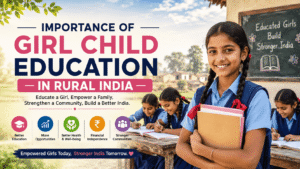
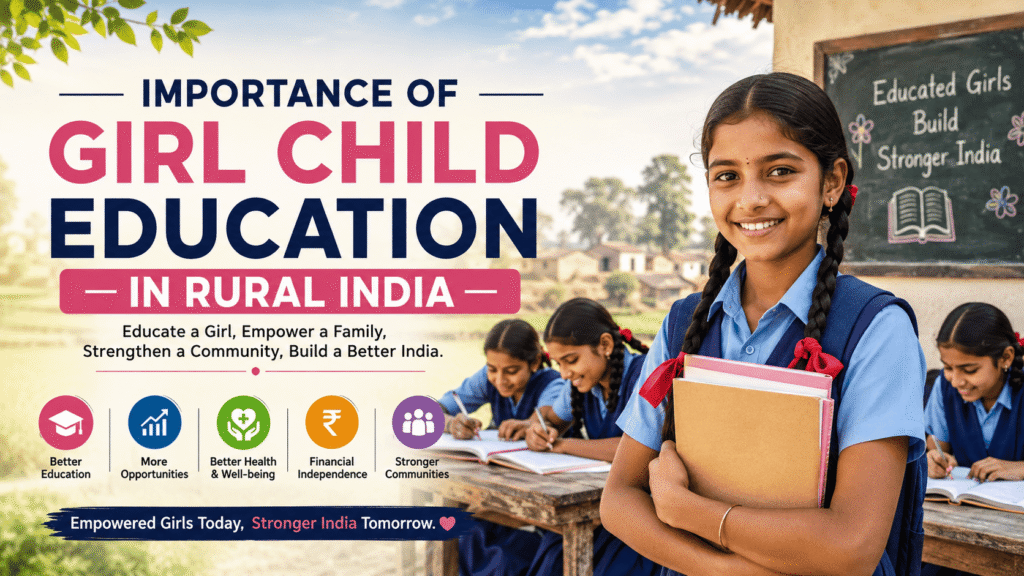
Education gives every child the opportunity to learn, develop skills, build confidence, and create a better future. For girls living in rural communities, access to quality education can be especially important because it can influence not only their individual development but also the progress of their families and communities.
The importance of girl child education in rural India extends beyond literacy and academic achievement. Education can improve health awareness, develop financial knowledge, create employment opportunities, encourage independence, promote gender equality, and strengthen participation in community life.
However, access to education does not automatically guarantee that every girl can complete her studies. Financial difficulties, distance to schools, transportation, household responsibilities, inadequate facilities, safety concerns, and social expectations can all create barriers.
Improving girl child education in rural India therefore requires more than encouraging school enrolment. Girls need safe schools, supportive families, qualified teachers, learning resources, digital access, career guidance, and opportunities to continue their education.
When girls are given these opportunities, education can become a powerful foundation for long-term rural development.
What Is Girl Child Education?
Girl child education means ensuring that girls have equal opportunities to enrol in school, attend regularly, complete their education, develop practical skills, and pursue higher education or vocational training according to their interests and abilities.
Quality education should help girls develop:
- Reading and writing skills
- Numeracy
- Communication skills
- Critical thinking
- Problem-solving abilities
- Digital literacy
- Financial awareness
- Health and hygiene awareness
- Leadership skills
- Career and livelihood skills
Education should not simply prepare a girl to pass an examination.
It should prepare her to understand her opportunities, make informed decisions, participate in society, and develop the skills required for adult life.
Why Is Girl Child Education Important in Rural India?
The importance of girls’ education in rural India can be understood through its long-term social, educational, and economic benefits.
When girls receive quality education, they can gain greater access to information, employment, skill development, technology, financial services, healthcare awareness, and community participation.
Educating rural girls can help:
- Improve female literacy
- Increase school completion
- Develop confidence and independence
- Expand career opportunities
- Improve financial literacy
- Promote health and hygiene awareness
- Reduce gender-based educational inequality
- Build digital skills
- Encourage entrepreneurship
- Strengthen families
- Develop future leaders
- Support rural economic development
The benefits can also extend from one generation to the next.
1. Girl Child Education Improves Literacy
Literacy is one of the most immediate benefits of education.
Reading and writing allow girls to understand information, communicate effectively, complete forms, access services, continue learning, and participate more confidently in everyday activities.
Numeracy is equally valuable.
A girl who develops basic mathematics skills can better understand prices, calculate expenses, manage a budget, maintain records, and make financial decisions.
These may appear to be simple skills. However, they form the foundation for higher education, employment, entrepreneurship, and independent decision-making.
Improving female literacy in rural India can therefore contribute to wider community development.
2. Education Builds Confidence and Self-Reliance
Education gives girls opportunities to communicate, ask questions, solve problems, participate in activities, and discover their abilities.
Classroom discussions, group projects, sports, cultural programmes, competitions, and leadership activities can help girls develop confidence.
Confidence matters because it can influence whether a girl feels comfortable:
- Expressing her opinions
- Asking for assistance
- Making decisions
- Learning new skills
- Applying for opportunities
- Participating in community activities
- Pursuing higher education
- Exploring different careers
Education can therefore help girls become active participants in decisions about their future.
3. Education Creates Employment Opportunities
One of the strongest long-term benefits of education for rural girls is greater access to career opportunities.
Education provides the academic foundation required for many professions. It can also introduce girls to vocational training and skill-development opportunities.
Depending on their qualifications, interests, skills, and local opportunities, educated girls may pursue careers in:
- Teaching
- Healthcare
- Banking
- Government services
- Agriculture
- Technology
- Administration
- Skilled trades
- Entrepreneurship
- Social development
- Small businesses
Career guidance is also important.
Students need information about courses, scholarships, vocational programmes, competitive examinations, higher education, and emerging career options.
Education combined with career awareness gives girls more choices when planning their futures.
4. Education Supports Financial Independence
Financial independence is an important aspect of women’s empowerment.
Education can improve access to employment and entrepreneurship while also helping girls understand how money and financial services work.
Financial literacy can include:
- Budgeting
- Saving
- Banking
- Digital payments
- Understanding expenses
- Maintaining financial records
- Basic business planning
- Responsible borrowing
These skills can become valuable whether a woman enters formal employment, manages a household, works in agriculture, runs a small business, or becomes an entrepreneur.
Financial knowledge allows people to make more informed economic decisions.
5. Girls’ Education Promotes Gender Equality
Girls and boys should have equal opportunities to develop their abilities.
However, social expectations can sometimes influence decisions about education, household responsibilities, careers, and higher studies.
Supporting female education in rural India reinforces the idea that a girl’s ambitions deserve the same encouragement as a boy’s.
Education can help girls explore opportunities in:
- Science and technology
- Healthcare
- Business
- Government
- Agriculture
- Sports
- Entrepreneurship
- Leadership
- Skilled professions
When families support these ambitions, younger generations can grow up seeing education as equally important for girls and boys.
6. Education Improves Health and Hygiene Awareness
Education can provide girls with reliable information about health, nutrition, hygiene, sanitation, and well-being.
For adolescent girls, appropriate awareness about menstrual hygiene can also support comfort, confidence, and regular participation in school.
Schools can provide age-appropriate education about:
- Personal hygiene
- Nutrition
- Sanitation
- Menstrual hygiene
- Physical well-being
- Emotional well-being
- Healthy habits
Health awareness can help girls recognise when they need assistance and identify trusted adults or healthcare professionals who can provide support.
7. Education Creates Awareness of Rights and Responsibilities
Education helps children understand both their rights and their responsibilities.
Girls can learn about equality, personal safety, citizenship, social responsibility, public services, and the importance of treating others with respect.
Greater awareness can help girls understand the opportunities and support systems available to them.
Education also encourages participation.
Girls who develop communication and leadership skills may become more comfortable contributing to school activities and community discussions.
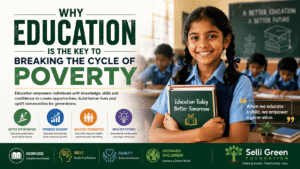
8. Education Can Help Reduce Intergenerational Poverty
Education and poverty are closely connected because limited educational opportunities can restrict access to skilled employment and higher-income livelihoods.
Quality education can improve access to:
- Employment
- Vocational training
- Entrepreneurship
- Higher education
- Digital opportunities
- Financial services
- Skill-development programmes
Education alone cannot eliminate poverty.
However, it can give girls more tools and opportunities to improve their economic circumstances.
When these opportunities continue across generations, education can contribute to greater long-term financial stability.
9. Educating Girls Strengthens Families
The impact of educating girls does not end when they leave school.
The knowledge and skills developed through education can influence decisions related to finances, health, nutrition, technology, children’s education, and household management.
Educated women may also be better positioned to support their children’s learning.
For example, they may be able to help children with schoolwork, communicate with teachers, understand educational opportunities, and encourage regular attendance.
This creates an important multiplier effect.
Educating one girl can positively influence the education of future generations.
10. Girl Child Education Supports Rural Development
Rural development depends on the participation of the entire community.
Educated women can contribute as:
- Teachers
- Healthcare professionals
- Entrepreneurs
- Farmers
- Skilled workers
- Government employees
- Business owners
- Community workers
- Professionals
- Local leaders
Their participation adds knowledge, skills, labour, entrepreneurship, and leadership to the rural economy.
Therefore, rural girls’ education should not be viewed only as an educational issue. It is also connected to community development.
11. Education Encourages Women Entrepreneurship
Not every educated girl will choose salaried employment.
Some may prefer entrepreneurship or self-employment.
Education can provide useful foundations for starting and managing small enterprises.
For example, girls can learn skills related to:
- Financial management
- Communication
- Digital marketing
- Record keeping
- Customer service
- Business planning
- Online selling
- Digital payments
Skill-development programmes can further prepare women for entrepreneurship in agriculture, handicrafts, tailoring, food production, digital services, retail, and other sectors.
Supporting girls’ education can therefore contribute to women’s economic participation in rural communities.
12. Digital Education Reduces the Opportunity Gap
Education today increasingly involves technology.
Students may need digital skills for higher education, employment applications, communication, banking, government services, online courses, and professional development.
Rural girls should have opportunities to develop basic digital literacy.
This can include learning to use:
- Computers
- Smartphones
- Educational applications
- Online learning platforms
- Digital documents
- Video conferencing
- Digital payment systems
- Online public services
Digital education should also include online safety, privacy, responsible technology use, and awareness of misinformation.
Closing the digital gap can help rural girls access opportunities that may not be available within their immediate geographical area.
13. Education Develops Leadership Skills
Leadership skills can begin developing during childhood.
Schools can give girls opportunities to participate in:
- Student groups
- Team projects
- Public speaking
- Sports
- Cultural activities
- Competitions
- Environmental programmes
- Community activities
These experiences develop communication, teamwork, responsibility, confidence, and decision-making.
Girls who develop these skills may later participate more actively in businesses, community organisations, local institutions, social initiatives, and leadership positions.
Major Challenges of Girl Child Education in Rural India
Understanding the challenges of girl child education in rural India is essential for developing practical solutions.
Different communities face different circumstances. Therefore, solutions should be based on local needs rather than assuming that every rural area faces the same problems.
Some common barriers can include the following.
Financial Barriers
Educational expenses can become difficult for economically vulnerable families.
Costs may include:
- Uniforms
- Books
- Transportation
- Stationery
- Digital devices
- Internet access
- Examination expenses
- Higher education expenses
Scholarships and educational assistance can help eligible students overcome some of these barriers.
Distance From Schools
Primary education may be accessible in some villages while secondary schools, colleges, or specialised training institutions are farther away.
Long travel distances can affect attendance, particularly when transportation is limited.
Expanding access and improving safe transportation can make continued education more practical.
Safety and Transportation
Parents naturally want their children to travel safely.
Reliable transportation, safer routes, appropriate school policies, and accessible support systems can increase confidence among both students and parents.
A safe learning environment is essential for consistent participation.
Household Responsibilities
Girls may sometimes spend considerable time cooking, cleaning, collecting water, caring for siblings, or completing other household responsibilities.
When these responsibilities interfere with school attendance or study time, educational progress can suffer.
Families can help by sharing household responsibilities more fairly.
Social and Cultural Expectations
In some communities, traditional expectations may affect decisions about girls’ education, higher studies, employment, or marriage.
Awareness programmes can help families understand the long-term benefits of education.
Successful women from similar backgrounds can also serve as positive examples for students and parents.
Inadequate School Infrastructure
The quality of the school environment can influence attendance and learning.
Schools need appropriate:
- Classrooms
- Toilets
- Drinking water
- Electricity
- Libraries
- Learning materials
- Digital resources
- Sports facilities
Infrastructure improvements should benefit all students while recognising the specific needs that can affect girls’ attendance and comfort.
Limited Access to Digital Technology
Students without access to devices, connectivity, or digital training may find it harder to benefit from online learning opportunities.
Digital learning centres and community technology programmes can help address this gap.
How to Improve Girl Child Education in Rural India
Recognising barriers is only the first step.
The next step is creating practical solutions that help girls enrol, attend regularly, learn effectively, complete their education, and move towards higher education or employment.
1. Increase Awareness Among Parents
Parents are among the most important influences on a child’s education.
Awareness initiatives can explain the long-term benefits of girls’ education, available scholarships, career opportunities, skill-development programmes, and higher education options.
Parents should also be encouraged to discuss educational goals with their daughters.
2. Make Schools Safe and Accessible
Schools should provide environments where girls feel comfortable learning.
Important requirements include:
- Safe classrooms
- Functional toilets
- Clean drinking water
- Appropriate sanitation
- Safe transportation
- Accessible teachers
- Clear safety policies
- Supportive learning environments
Accessibility becomes particularly important as girls progress into secondary and higher education.
3. Provide Scholarships and Learning Materials
Financial difficulties should not automatically prevent a capable student from continuing her education.
Depending on eligibility and programme availability, support can include:
- Scholarships
- Books
- Uniforms
- Stationery
- Transportation assistance
- Digital devices
- Internet access
- Examination support
Students and parents should also receive guidance about where legitimate educational assistance is available.
4. Strengthen Digital Learning Access
Schools and community organisations can create opportunities for students to develop digital skills.
Computer centres, digital libraries, educational applications, online learning programmes, and technology workshops can complement classroom education.
Digital learning is particularly valuable when students need access to educational resources beyond their local area.
5. Provide Career Guidance
Girls should understand what opportunities become available through education.
Career guidance can introduce students to:
- Degree programmes
- Diploma courses
- Vocational training
- Scholarships
- Government examinations
- Professional careers
- Entrepreneurship
- Skill-development programmes
Career awareness can give students a clearer reason to continue their education.
6. Create Mentorship Opportunities
Mentorship can connect students with teachers, professionals, entrepreneurs, graduates, and community leaders.
A mentor can help a girl:
- Understand career options
- Set educational goals
- Identify learning opportunities
- Build confidence
- Prepare for higher education
- Explore skill development
Seeing women succeed in different professions can make career possibilities feel more achievable.
7. Strengthen Community Participation
Education becomes easier to sustain when the community supports it.
Parents, teachers, local leaders, volunteers, youth groups, and organisations can work together to identify girls who need educational support and address barriers to attendance.
Community participation also creates shared responsibility for education.
Role of Parents in Girls’ Education
Parents can support their daughters through simple but meaningful actions.
They can:
- Encourage daily attendance
- Provide adequate study time
- Attend parent-teacher meetings
- Ask about school progress
- Share household responsibilities
- Encourage questions
- Discuss career goals
- Explore scholarships
- Support digital learning
- Encourage higher education
- Avoid limiting career choices based on gender
A parent’s encouragement can strongly influence whether a girl believes education is worth pursuing.
Role of Schools and Teachers
Teachers do more than deliver lessons.
They can identify learning difficulties, encourage students, communicate with families, introduce opportunities, and help girls develop confidence.
Schools can strengthen girls’ education through:
- Remedial learning
- Career guidance
- Digital literacy
- Health awareness
- Sports
- Leadership programmes
- Life-skills education
- Parent meetings
- Mentoring
- Educational competitions
A supportive school environment encourages students to remain engaged with learning.
Role of NGOs in Girl Child Education
Government systems, schools, communities, businesses, and non-profit organisations can all contribute to improving educational opportunities.
NGOs can complement existing educational systems through programmes such as:
- Educational awareness
- School material distribution
- Scholarship assistance
- Digital learning
- Remedial education
- Career guidance
- Mentorship
- Skill development
- Health and hygiene awareness
- School infrastructure support
- Community engagement
At Selli Green Foundation, we believe every girl deserves an opportunity to learn, grow, develop skills, and work towards an independent future.
Supporting girl child education is an important part of building communities where children have opportunities to realise their potential.
Educational support becomes most effective when it addresses real community needs and works alongside parents, teachers, schools, and local stakeholders.
From School Education to Skill Development
Education should also prepare young people for life beyond school.
As girls grow older, academic learning can be complemented by practical skills.
Depending on their interests, these may include:
- Computer skills
- Communication
- Financial literacy
- Entrepreneurship
- Vocational skills
- Agriculture-related skills
- Handicrafts
- Tailoring
- Digital marketing
- Job-readiness training
Connecting education and skill development for rural girls can make the transition from school to higher education, employment, or entrepreneurship easier.
A Practical Framework for Supporting Rural Girls’ Education
Improving girls’ education can be viewed as a continuous journey rather than a single intervention.
Step 1: Enrol
Ensure girls have access to school and understand available educational opportunities.
Step 2: Attend
Address barriers such as transportation, safety, household responsibilities, and basic educational expenses.
Step 3: Learn
Provide quality teaching, learning materials, remedial support, libraries, and digital resources.
Step 4: Continue
Encourage girls to complete secondary education and explore higher education or vocational training.
Step 5: Develop Skills
Introduce digital literacy, communication, financial knowledge, leadership, and practical skills.
Step 6: Build a Career
Provide career guidance, mentorship, training, and information about employment or entrepreneurship.
Step 7: Empower Others
Educated women can mentor younger girls and encourage families within their communities to support education.
The goal should therefore be:
Enrol → Attend → Learn → Continue → Develop Skills → Build a Career → Empower Others
How Individuals Can Support Girl Child Education
Individuals do not need to run large programmes to contribute.
Practical ways to help include:
- Support verified educational initiatives
- Donate useful learning materials
- Sponsor eligible students through credible programmes
- Volunteer as a mentor
- Support digital literacy programmes
- Help students identify legitimate scholarships
- Encourage parents to prioritise education
- Support skill-development initiatives
- Promote equal educational opportunities
Before donating, verify the organisation and understand how the contribution will be used.
Girl Child Education: Quick Action Checklist
Families and communities can use this checklist to identify practical areas of support.
- Encourage regular school attendance
- Provide sufficient study time
- Reduce unnecessary household burdens
- Ensure safe transportation
- Support access to books and learning materials
- Encourage digital literacy
- Discuss higher education
- Explore scholarships
- Provide career guidance
- Encourage skill development
- Support health and hygiene awareness
- Encourage sports and extracurricular activities
- Introduce mentorship opportunities
- Promote equal opportunities for girls and boys
- Celebrate educational achievements
Not every action has to happen at once.
Start by identifying the biggest barrier affecting girls in your community and address that problem first.
Common Mistakes to Avoid When Supporting Girls’ Education
Focusing Only on School Enrolment
Enrolling a girl in school is important, but it is only the beginning.
Attendance, learning quality, completion, higher education, and skill development also matter.
Ignoring Local Challenges
The barriers affecting girls can vary significantly between communities.
Programmes should first understand local needs before deciding what support to provide.
Providing Materials Without Long-Term Support
Books and stationery can help, but some students may also need mentoring, remedial education, transportation, digital access, or career guidance.
Educational support should focus on long-term outcomes where possible.
Ignoring Career Awareness
Students may lose motivation when they cannot see how education connects to their future.
Career guidance can help girls understand why completing their education matters.
Assuming One Solution Works Everywhere
Rural India is diverse.
A solution that works in one village may not address the challenges faced in another.
Local participation is therefore essential.
Frequently Asked Questions About Girl Child Education in Rural India
What is the importance of girl child education in rural India?
Girl child education can improve literacy, confidence, health awareness, digital skills, financial knowledge, career opportunities, and community participation. It can also promote gender equality and contribute to rural development.
Why should we educate girls in rural areas?
Education gives rural girls the knowledge and skills required to make informed decisions, pursue higher education, develop careers, participate in economic activities, and contribute to their communities.
What are the benefits of girl child education?
Major benefits include improved literacy, confidence, employment opportunities, financial independence, health awareness, digital literacy, leadership skills, and greater participation in family and community decisions.
What are the challenges of girl child education in rural India?
Challenges may include financial difficulties, distance from schools, transportation limitations, safety concerns, household responsibilities, social expectations, inadequate infrastructure, and limited digital access.
How can girl child education be improved in villages?
Communities can improve girls’ education through parental awareness, safe schools, transportation, scholarships, learning materials, digital education, mentorship, career guidance, and skill-development opportunities.
What is the role of parents in girl child education?
Parents can encourage regular attendance, provide study time, communicate with teachers, share household responsibilities fairly, support higher education, and encourage girls to pursue careers according to their abilities and interests.
How does girls’ education promote gender equality?
Equal access to education gives girls opportunities to develop skills, pursue careers, become financially independent, participate in decision-making, and challenge unnecessary restrictions based on gender.
How does girl child education help reduce poverty?
Education can improve access to employment, entrepreneurship, financial literacy, vocational training, and higher education. These opportunities can contribute to greater economic stability over time.
Why is digital education important for rural girls?
Digital literacy helps girls access online educational resources, develop technology skills, use digital services, explore employment opportunities, and participate in an increasingly digital economy.
How can NGOs support girl child education?
NGOs can provide educational awareness, learning resources, remedial education, scholarships, digital learning, mentorship, career guidance, skill development, health awareness, and community support according to local needs.
How can teachers encourage girls to continue education?
Teachers can provide academic support, encourage classroom participation, communicate with parents, introduce career opportunities, identify learning difficulties, and create a respectful learning environment.
How does educating a girl benefit her family?
Education can improve knowledge related to finances, health, nutrition, technology, public services, and children’s education. These skills can support informed decision-making within families.
What skills should rural girls learn along with formal education?
Useful skills can include digital literacy, communication, financial literacy, problem-solving, leadership, entrepreneurship, vocational skills, and career readiness.
How can individuals support girls’ education in India?
Individuals can support credible educational programmes, donate useful learning materials, volunteer as mentors, promote scholarship awareness, support digital education, and encourage families to prioritise girls’ education.
Conclusion: Educate Girls, Empower Rural India
The importance of girl child education in rural India reaches far beyond school classrooms.
Education gives girls an opportunity to develop literacy, confidence, digital skills, financial knowledge, career abilities, and leadership qualities.
However, providing access to school is only the first step.
Girls also need opportunities to enrol, attend, learn, complete their education, develop skills, and prepare for their future.
Parents can provide encouragement. Teachers can create supportive learning environments. Communities can remove local barriers. Organisations can provide targeted assistance. Individuals can contribute through mentorship, awareness, and responsible support.
When these efforts work together, more girls can develop the knowledge and skills needed to participate fully in their families, communities, and the economy.
Educate a Girl. Develop Her Skills. Expand Her Opportunities. Empower a Community.