Introduction
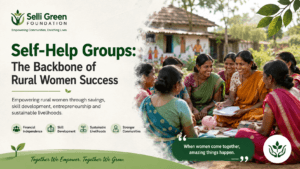
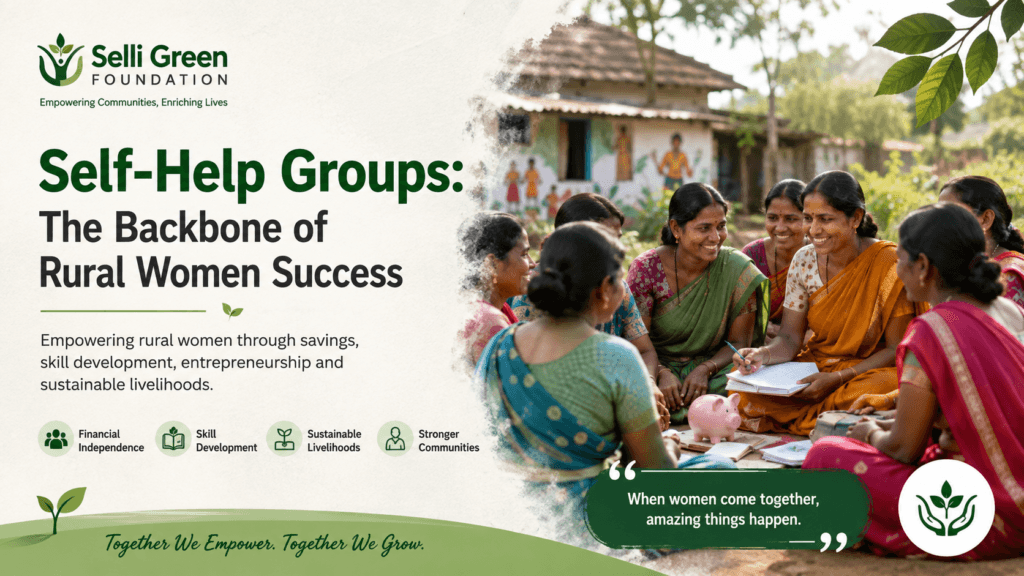
Self-Help Groups (SHGs) have emerged as one of the most successful grassroots movements for empowering rural women in India. By encouraging women to save together, access financial resources, develop practical skills, and build sustainable livelihoods, Self-Help Groups have transformed millions of lives. Today, SHGs are not only improving household incomes but also strengthening communities, promoting gender equality, and driving rural development.
Women in rural areas often face challenges such as limited education, unemployment, lack of financial independence, and restricted access to opportunities. However, Self-Help Groups provide a platform where women can support one another, gain confidence, and become financially independent. As a result, they are able to improve their families’ quality of life while contributing to the social and economic development of their villages.
At Selli Green Foundation, we believe that empowering women through Self-Help Groups creates stronger families, healthier communities, and a greener future. Our initiatives focus on skill development, entrepreneurship, financial literacy, and sustainable livelihood programs that help women become self-reliant and confident leaders.
A Self-Help Group (SHG) is a voluntary association of 10 to 20 women who come together to save money, share knowledge, and support each other financially and socially. Members contribute a small amount of savings every month, creating a common fund that can be used for loans, business investments, education, healthcare, or emergency needs.
Unlike traditional financial systems, SHGs encourage mutual trust and collective responsibility. Furthermore, they provide women with opportunities to improve leadership skills, participate in decision-making, and develop entrepreneurial abilities.
Today, millions of women across India are members of Self-Help Groups, making them one of the country’s most effective models for rural development and women’s empowerment.
Why Self-Help Groups Are Important
Self-Help Groups play a vital role in empowering rural women by providing financial security, social support, and opportunities for personal growth.
The major benefits of Self-Help Groups include:
- Financial independence
- Access to affordable credit
- Entrepreneurship opportunities
- Skill development
- Leadership training
- Better education for children
- Improved healthcare
- Increased confidence
- Community participation
- Sustainable livelihoods
Moreover, SHGs promote equality by encouraging women to actively participate in family and community decision-making.
Financial Independence Through Self-Help Groups
Financial independence is one of the greatest achievements of Self-Help Groups.
Members regularly save small amounts of money that form a common savings fund. This fund allows women to access affordable loans without depending on private money lenders who often charge high interest rates.
These loans are commonly used for:
- Starting small businesses
- Purchasing livestock
- Organic farming
- Bamboo craft production
- Palm leaf handicrafts
- Tailoring units
- Food processing
- Grocery shops
- Children’s education
- Medical emergencies
As a result, women become financially independent and improve their family’s standard of living.
Regular savings also teach financial discipline and encourage long-term planning for education, housing, healthcare, and business expansion.
Skill Development and Livelihood Opportunities
Skill development is one of the strongest pillars of successful Self-Help Groups.
Many SHGs organize training programs that help women learn practical skills suitable for local markets.
Common training programs include:
- Tailoring
- Embroidery
- Bamboo handicrafts
- Palm leaf product making
- Organic farming
- Mushroom cultivation
- Dairy farming
- Poultry farming
- Food processing
- Candle making
- Soap making
- Eco-friendly product manufacturing
- Digital literacy
- Financial literacy
- Marketing and sales
Additionally, these programs help women establish sustainable businesses that generate regular income.
Women Entrepreneurship Through Self-Help Groups
Many successful rural entrepreneurs began their journey through Self-Help Groups.
After receiving financial assistance and entrepreneurship training, women start businesses that manufacture handicrafts, eco-friendly products, garments, natural household products, and agricultural goods.
Some women also establish:
- Tailoring centres
- Organic farms
- Homemade food businesses
- Bamboo product units
- Palm leaf craft enterprises
- Rural retail stores
Furthermore, these businesses create employment opportunities for other women in nearby villages, leading to inclusive economic growth.
Building Stronger Families
The benefits of Self-Help Groups extend beyond individual women.
When women earn a stable income, families experience:
- Better education for children
- Improved healthcare
- Nutritious food
- Safer housing
- Reduced debt
- Increased savings
- Better sanitation
- Higher quality of life
Consequently, children grow up in healthier environments with greater educational opportunities.
Research consistently shows that women reinvest a significant portion of their income into their families, creating long-term social benefits.
Community Development and Social Impact
Self-Help Groups also contribute to broader community development.
Many SHGs organize activities such as:
- Tree plantation drives
- Plastic-free awareness campaigns
- Village cleanliness programs
- Rainwater harvesting
- Waste management
- Environmental conservation
- Nutrition awareness
- Health camps
- Women’s health awareness
- Child education campaigns
Similarly, SHGs encourage community participation and collective action, resulting in cleaner, healthier, and more sustainable villages.
Government Support for Self-Help Groups
The Government of India has launched several initiatives that strengthen Self-Help Groups and encourage women’s entrepreneurship.
Some of the major programs include:
DAY-NRLM (Deendayal Antyodaya Yojana – National Rural Livelihood Mission)
DAY-NRLM promotes women-led Self-Help Groups by providing financial assistance, training, livelihood support, and market linkages.
NABARD
The National Bank for Agriculture and Rural Development supports SHGs through financial inclusion programs, bank linkage initiatives, and rural entrepreneurship development.
Pradhan Mantri Mudra Yojana
This scheme provides financial support to small entrepreneurs, including women operating businesses through Self-Help Groups.
These initiatives continue to improve financial inclusion and create sustainable livelihood opportunities for rural women across India.
Challenges Faced by Self-Help Groups
Although Self-Help Groups have transformed millions of lives, they continue to face several challenges.
Some common challenges include:
- Limited market access
- Lack of digital knowledge
- Insufficient business training
- Limited access to technology
- Transportation difficulties
- Competition from large businesses
- Climate-related risks
However, regular training, government support, and NGO partnerships help overcome these challenges and improve long-term sustainability.
How NGOs Strengthen Self-Help Groups
Non-governmental organizations play a crucial role in strengthening rural women through Self-Help Groups.
At Selli Green Foundation, we support women by providing:
- Skill development training
- Entrepreneurship guidance
- Financial literacy programs
- Sustainable livelihood initiatives
- Eco-friendly product training
- Market linkage support
- Leadership development
- Community awareness programs
Moreover, our mission is to create self-reliant women who contribute to sustainable rural development while protecting the environment.
Success Story
A group of rural women in Tamil Nadu formed a Self-Help Group by saving just ₹100 every month. With support from skill development programs, they learned bamboo handicraft production and started manufacturing eco-friendly household products.
Within two years, the women doubled their household income, educated their children, and created employment opportunities for several other women in their village.
This inspiring journey demonstrates how Self-Help Groups can transform lives through collective effort, financial discipline, and entrepreneurship.
How You Can Support Self-Help Groups
Everyone can contribute to empowering rural women.
You can:
- Purchase products made by SHGs.
- Promote women-owned businesses.
- Volunteer your professional skills.
- Donate to rural development initiatives.
- Support eco-friendly products.
- Encourage financial literacy.
- Spread awareness about women’s empowerment.
- Partner with NGOs working in rural communities.
Every contribution helps create lasting social and economic impact.
About Selli Green Foundation
Selli Green Foundation is committed to empowering rural communities through education, women empowerment, environmental conservation, sustainable livelihoods, and skill development.
Our Self-Help Group initiatives help women become financially independent by providing entrepreneurship training, financial literacy, eco-friendly livelihood opportunities, and community development programs.
Together, we are building stronger families, greener communities, and a brighter future for rural India.
Frequently Asked Questions (FAQs)
What is a Self-Help Group?
A Self-Help Group is a small group of women who save money together, support one another financially, and work collectively to improve their livelihoods.
How do Self-Help Groups empower rural women?
Self-Help Groups empower women through savings, affordable loans, entrepreneurship, skill development, leadership training, and community participation.
What are the benefits of joining a Self-Help Group?
Members gain financial independence, improved confidence, better access to government schemes, business opportunities, and stronger community support.
How do NGOs help Self-Help Groups?
NGOs provide training, financial literacy, entrepreneurship guidance, market linkages, and sustainable livelihood support.
Why are Self-Help Groups important for rural development?
Self-Help Groups improve household incomes, promote women’s empowerment, reduce poverty, encourage entrepreneurship, and strengthen rural communities.
Conclusion
Self-Help Groups are the backbone of rural women’s success because they create opportunities for financial independence, entrepreneurship, education, and sustainable livelihoods. They empower women to become confident decision-makers, successful entrepreneurs, and active contributors to their families and communities.
With continued support from government programs, NGOs, financial institutions, and local communities, Self-Help Groups will continue transforming lives across rural India. At Selli Green Foundation, we remain committed to strengthening SHGs through skill development, sustainable livelihood initiatives, and women empowerment programs that create lasting social impact.
Together, we can build stronger women, prosperous rural communities, and a sustainable future for generations to come.