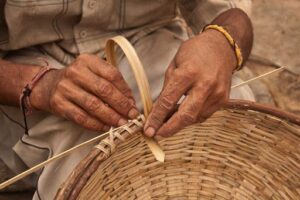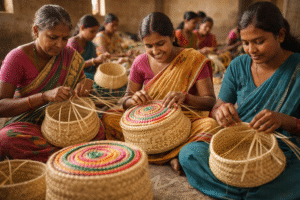
A few months ago, during one of our visits to a small village in rural Tamil Nadu, we met a group of women who were sitting together under a tree weaving palm leaves into simple baskets.
When we spoke to them, they told us something very honest.
“We know how to do this… but we don’t know how to earn from it.”
That one sentence stayed with us.
Many of these women had learned bamboo weaving and palm leaf crafting from their mothers and grandmothers. These are traditional skills that have existed in rural communities for generations. But today, without proper support, market access, or training, these skills often don’t translate into income.
Many of these women had learned bamboo weaving and palm leaf crafting from their mothers and grandmothers. These are traditional skills that have existed in rural communities for generations. But today, without proper support, market access, or training, these skills often don’t translate into income.
This is the reality in many villages we visit.
At Selli Green Foundation, our work begins by listening. Before starting any program, we sit with the community members, understand their needs, and then design training programs that are actually useful for their day-to-day lives.
Creating Opportunities Through Skill Training
In many of our training sessions, women tell us they want to support their families but don’t know where to begin.
Some are familiar with bamboo craft. Others have basic tailoring skills. Many are interested in starting small home-based work but lack financial knowledge or guidance.
So, we organise hands-on training programs in collaboration with local Self-Help Groups (SHGs). These sessions are not classroom lectures — they are practical workshops where participants learn by doing.
We introduce them to:
- Bamboo craft making
- Palm leaf product manufacturing
- Organic farming practices
- Tailoring and small-scale entrepreneurship
- Basic financial literacy
Over time, we’ve seen participants begin producing eco-friendly items like bamboo baskets, palm leaf trays, and handmade storage products from their homes.
One woman told us she was able to pay her child’s school fees for the first time using the income she earned from selling handmade palm leaf products.
These are small changes — but they matter.
Reviving Traditional Crafts That Are Slowly Disappearing
India has always been known for its handmade products, but many rural artisans struggle to continue their craft because there’s no proper platform to sell their work.
We’ve met skilled craftsmen who create beautiful bamboo products but sell them only within their local markets because they don’t know how to reach customers outside their village.
Through our initiatives, we provide:
- Product design guidance
- Awareness about online selling platforms
- Basic branding support
- Market linkage opportunities
By doing this, we help artisans take their products beyond village boundaries.
At the same time, promoting bamboo and palm-based products reduces the use of plastic materials in everyday life. It’s better for the environment and also creates sustainable income opportunities for rural families.
Supporting Women Through Self-Help Groups
But after a few weeks, we notice a change.
They begin asking questions.
They start sharing ideas.
They help each other during practice sessions.
Through Self-Help Groups, women learn not only new skills but also gain confidence in managing finances and making decisions.
When women start earning even a small income, it impacts the entire family — from children’s education to household expenses.
Encouraging Sustainable Farming and Environmental Awareness
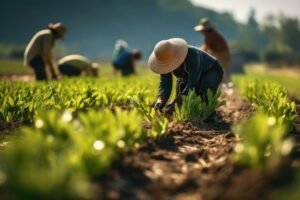
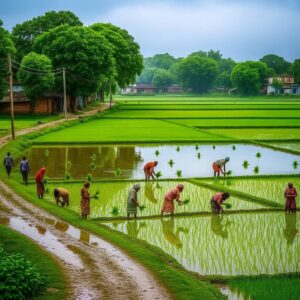
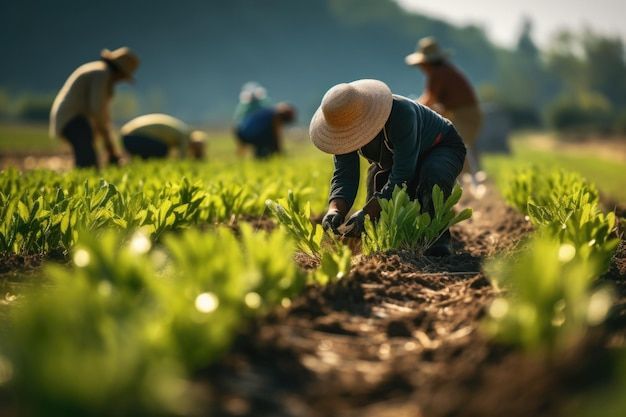
Agriculture is the backbone of rural communities, but many farmers we interact with share concerns about soil fertility and water shortages.
To address this, our team conducts awareness programs on:
- Organic farming techniques
- Bamboo plantation
- Use of eco-friendly alternatives
- Waste management practices
- Tree plantation drives
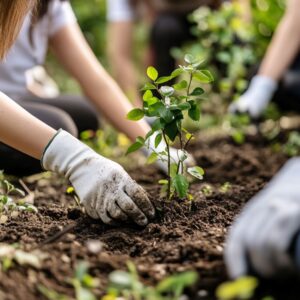
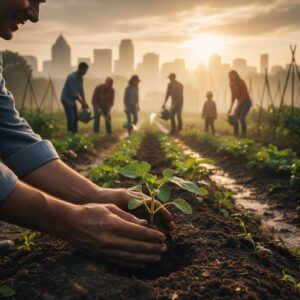
In some villages, school children and volunteers have joined us in planting saplings during environmental awareness campaigns.
These small efforts help build a sense of responsibility towards protecting natural resources.
Improving Basic Facilities in Rural Areas
Access to basic infrastructure is still a challenge in many rural regions.
In some of the villages we work in, street lighting is limited and sanitation facilities are inadequate.
Our development programs focus on:
- Installing solar lighting systems
- Supporting sanitation initiatives
- Improving school infrastructure
Even simple improvements like solar lights near community areas can make a big difference in safety and convenience for families.
Working With CSR Partners for Greater Impact
Many organisations today want to contribute to social development through CSR initiatives.
At Selli Green Foundation, we work with CSR partners who support:
- Rural education programs
- Women empowerment initiatives
- Environmental sustainability projects
- Skill development training
With their support, we’re able to reach more communities and conduct training programs in areas that need it the most.
Looking Ahead: Building Eco-Friendly Villages
Our long-term goal is to develop eco-village models that focus on:
- Clean energy solutions
- Water conservation methods
- Waste management systems
- Green livelihood opportunities
These villages can serve as examples of how sustainable development can improve both economic and environmental conditions.
Conclusion
Sustainable rural development is not just about infrastructure or funding.
It’s about creating opportunities for people to use their skills, support their families, and improve their quality of life.
At Selli Green Foundation, we are committed to working alongside rural communities to create self-reliant and environmentally responsible villages.
With the support of volunteers, donors, and CSR partners, we hope to continue making a positive difference in the lives of many families.